Three13 · Music & Legacy Feature
Alice CooperDetroit's Godfatherof Shock Rock
Born Vincent Furnier on Detroit's east side, the kid who took Halloween seriously grew up to invent shock rock — guillotines, boa constrictors, and a six-decade career that sold 50 million records and earned the Rock and Roll Hall of Fame.
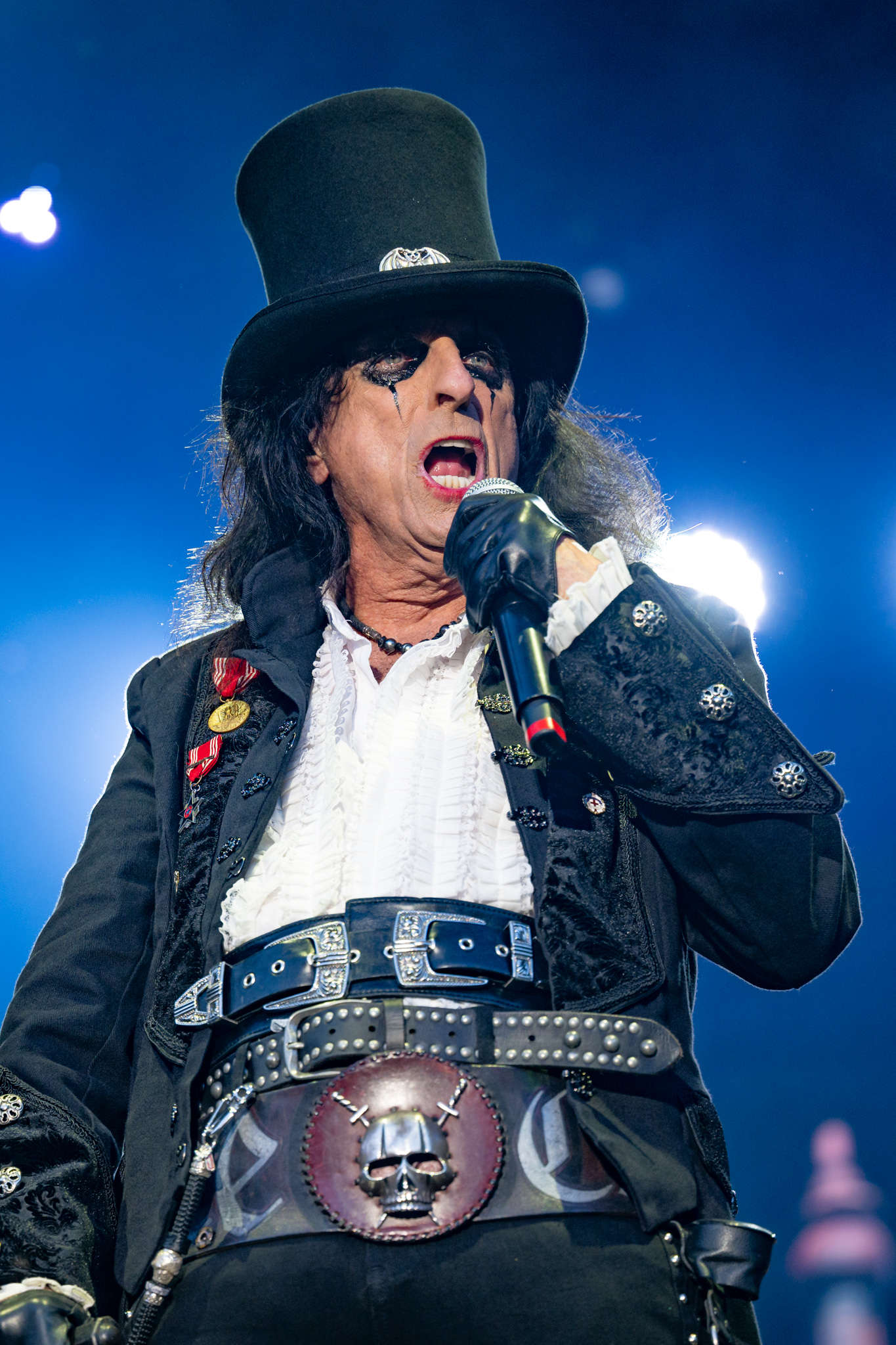
Alice Cooper — born Vincent Damon Furnier on February 4, 1948, in Detroit, Michigan — is the artist music journalists and peers call "The Godfather of Shock Rock." With a career spanning over six decades, he is known for his raspy singing voice and theatrical stage shows featuring electric chairs, guillotines, fake blood, and boa constrictors. He drew from horror films, vaudeville, and garage rock to pioneer a macabre and theatrical brand of rock designed to shock audiences — and he did it all starting from a few blocks off Eastland Mall on Detroit's east side.
East Detroit to the Eastown Theatre
The Furnier family resided in East Detroit on Lincoln Avenue near Kelly Road, a few blocks from Eastland Mall. Cooper attended Kantner Elementary School, recalled watching horror movies at the Eastown Theatre — where he would later perform — and took local neighborhood trick-or-treating on Halloween, the "biggest night of the year," very seriously. That childhood obsession with horror and spectacle would become the foundation of an entire genre.
Following a series of childhood illnesses, he moved with his family to Phoenix, Arizona, where he attended Cortez High School. In 1964, 16-year-old Furnier gathered four fellow cross-country teammates to form a group for the school talent show — the Earwigs, dressed in Beatles costumes with modified lyrics about the track team. They won. The group decided to become a real band, acquired instruments from a pawn shop, and evolved into the Alice Cooper band.
The Chicken, Zappa, and the Birth of Shock Rock
Discovered by Frank Zappa in Los Angeles and signed to his Straight Records label, the band developed its shock rock reputation almost by accident. The infamous "Chicken Incident" at the Toronto Rock and Roll Revival in September 1969 — in which Cooper threw a live chicken into the crowd expecting it to fly — made front-page news. Zappa phoned to ask if the rumor that Cooper had bitten off the chicken's head was true. Cooper denied it. Zappa's advice: "Well, whatever you do, don't tell anyone you didn't do it."
Fed up with Californians' indifference, the band relocated to Pontiac, Michigan, where their bizarre stage act was better received by Midwestern crowds accustomed to the proto-punk of the Stooges and the MC5. "L.A. just didn't get it," Cooper said. "They were all on the wrong drug for us. They were on acid and we were basically drinking beer. We fit much more in Detroit than we did anywhere else."
School's Out and the Ezrin Era
Teaming with producer Bob Ezrin, the band released Love It to Death (1971), featuring "I'm Eighteen," which reached #21 on the Billboard Hot 100. Then came School's Out (1972) — the breakthrough record that peaked at #2 and sold over a million copies — followed by Billion Dollar Babies (1973), the band's commercial peak.
"We were into fun, sex, death and money when everybody was into peace and love. We wanted to see what was next. It turned out we were next, and we drove a stake through the heart of the Love Generation." — Alice Cooper
In 1975, Furnier legally changed his name to Alice Cooper and launched a solo career with the concept album Welcome to My Nightmare. In 1989, Trash featured the massive hit single "Poison," which became his biggest-selling single worldwide. In 2021, Detroit Stories brought him back home to the Motor City.
A Career in Motion
1948
Born Vincent Damon Furnier on February 4 in Detroit, Michigan, on Lincoln Avenue near Kelly Road in East Detroit, a few blocks from Eastland Mall.
1964
Forms the band that would become Alice Cooper with Cortez High School cross-country teammates in Phoenix, Arizona, initially calling themselves the Earwigs.
1969
Discovered by Frank Zappa in Los Angeles and signed to his Straight Records label. The infamous 'Chicken Incident' at the Toronto Rock and Roll Revival launches the shock rock legend.
1971
Teaming with producer Bob Ezrin, releases Love It to Death — the breakthrough album featuring the single 'I'm Eighteen,' which reaches #21 on the Billboard Hot 100.
1972
Releases School's Out, the breakthrough record that peaks at #2 and sells over a million copies, cementing the band's place in rock history.
1973
Releases Billion Dollar Babies, the band's commercial peak, with the title track and 'No More Mr. Nice Guy' becoming signature hits.
1975
Furnier legally changes his name to Alice Cooper and launches a solo career with the concept album Welcome to My Nightmare, accompanied by a groundbreaking theatrical tour.
1989
Releases Trash, featuring the massive hit single 'Poison,' which becomes his biggest-selling album and single worldwide.
2011
The original Alice Cooper band is inducted into the Rock and Roll Hall of Fame.
2021
Releases Detroit Stories, an album that brings Cooper back home to the Motor City, celebrating the Detroit rock sound that shaped him.
Recognition
- ◆Rock and Roll Hall of Fame inductee (original Alice Cooper band, 2011)
- ◆Over 50 million records sold worldwide across a 60+ year career
- ◆30 studio albums released across the band and solo catalogs
- ◆Known as 'The Godfather of Shock Rock' by music journalists and peers
- ◆Solid Rock Foundation providing free music and art programs for at-risk youth in Phoenix
Learn More
Frequently Asked
Is Alice Cooper from Detroit?+
Yes. Alice Cooper was born Vincent Damon Furnier on February 4, 1948, in Detroit, Michigan. His family resided in East Detroit on Lincoln Avenue near Kelly Road, a few blocks from Eastland Mall. He later moved with his family to Phoenix, Arizona, following a series of childhood illnesses, where he attended Cortez High School and formed the original Alice Cooper band.
Why is Alice Cooper called the Godfather of Shock Rock?+
Alice Cooper is considered by music journalists and peers to be 'The Godfather of Shock Rock' because he pioneered a grandly theatrical brand of rock designed to shock audiences. Drawing from horror films, vaudeville, and garage rock, his stage shows featured electric chairs, guillotines, fake blood, and boa constrictors — permanently transforming rock stagecraft.
What are Alice Cooper's biggest songs?+
Alice Cooper's biggest and most enduring songs include 'I'm Eighteen' (1970), 'School's Out' (1972), 'No More Mr. Nice Guy' (1973), 'Only Women Bleed' (1975), 'You and Me' (1977), and 'Poison' (1989), the latter becoming his biggest-selling single worldwide.
When was Alice Cooper inducted into the Rock and Roll Hall of Fame?+
The original Alice Cooper band — Vincent Furnier, Glen Buxton, Michael Bruce, Dennis Dunaway, and Neal Smith — was inducted into the Rock and Roll Hall of Fame in 2011. Cooper has sold over 50 million records worldwide across a career spanning more than six decades.
About This Feature
This Three13 feature draws on verified public sources including Wikipedia, Alice Cooper's official website, WDET, and Britannica. All factual claims — birth date and Detroit origins, the Frank Zappa signing, the Chicken Incident, album releases and chart positions, and the 2011 Rock and Roll Hall of Fame induction — are drawn from the cited sources above. The portrait is sourced from Wikimedia Commons and used editorially.