The Basement That Birthed a Revolution
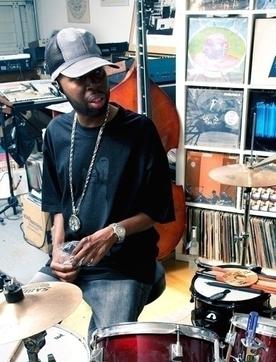
James Dewitt Yancey grew up at the northeast corner of McDougall and Nevada on Detroit's east side — the son of an opera singer mother and a jazz bassist father who performed Harlem Globetrotters half-time shows. Before he could speak, his mother Maureen ("Ma Dukes") said he could "match pitch perfect harmony." But it was in the family basement, alone with a tape deck and a growing record collection, where a teenage Yancey taught himself to make beats — and quietly began rewriting the rules of rhythm.
In 1992, a chance meeting with Detroit funk musician Amp Fiddler changed everything. Fiddler handed Yancey an Akai MPC — a sampler and drum machine he mastered within days. Two years later, on the 1994 Lollapalooza tour, Fiddler introduced Yancey to Q-Tip of A Tribe Called Quest, passing along a Slum Village demo tape. The connection would open doors to Janet Jackson, Busta Rhymes, De La Soul, and The Pharcyde — all before Yancey turned 25.
The "Dilla Swing": Killing the Quantize
What made J Dilla revolutionary was deceptively simple: he turned off quantization. Since the dawn of drum machines, producers had snapped every hit to a rigid grid to keep timing "perfect." Dilla let his drums land where his hands and ears placed them — slightly ahead, slightly behind, deliberately "drunk." The result was a human feel that electronic music had spent two decades trying to eliminate.
As The Guardian wrote, "His affinity for crafting lengthy, melodic loops peppered with breakbeats and vocal samples took instrumental hip-hop into new, more musically complex realms." Questlove of The Roots calls Dilla's approach the single most important rhythmic innovation since James Brown's band. Dan Charnas's 2022 biography Dilla Time became a New York Times bestseller, cementing the academic case for what fans already knew.
Slum Village, The Soulquarians & Donuts
At Pershing High School, Yancey formed Slum Village with classmates T3 and Baatin. Their 2000 major-label debut Fantastic, Vol. 2 drew instant comparisons to A Tribe Called Quest and put Detroit hip-hop on the national map. Around the same time, Yancey co-founded the Soulquarians — a collective with Questlove, D'Angelo, and James Poyner that shaped the entire neo-soul movement, including Common's breakthrough Like Water for Chocolate.
His final album, Donuts, was released on Stones Throw Records on February 7, 2006 — his 32nd birthday. He died three days later from complications of thrombotic thrombocytopenic purpura (TTP) and lupus. Composed largely from a hospital bed in Los Angeles, the 31-track instrumental record is now considered one of the greatest hip-hop albums ever made.
The Smithsonian Recognition
In 2014, J Dilla's custom Akai MPC 3000 Limited Edition and his Minimoog Voyager synthesizer were donated to the Smithsonian National Museum of African American History & Culture. The instruments sit alongside artifacts from Chuck Berry, Public Enemy, and Louis Armstrong — a permanent testament to the Detroit kid who proved that a drum machine could swing.
Career Timeline
Born James Dewitt Yancey on Detroit's east side at McDougall & Nevada. Mother Maureen (Ma Dukes) was an opera singer; father Beverly was a jazz bassist.
Meets Amp Fiddler, who introduces him to the Akai MPC. Fiddler later connects him to Q-Tip of A Tribe Called Quest on the 1994 Lollapalooza tour.
Produces seven tracks on The Pharcyde's Labcabincalifornia. Forms Slum Village with classmates T3 and Baatin at Pershing High School.
Slum Village's major-label debut Fantastic, Vol. 2 drops. Co-founds the Soulquarians collective with Questlove, D'Angelo, and James Poyner.
Releases solo debut Welcome 2 Detroit on BBE Records, launching the Beat Generation series. Begins using the name 'J Dilla' to distinguish from Jermaine Dupri.
Donuts released three days before his death from TTP and lupus. The 31-track instrumental album becomes his defining masterpiece.
J Dilla's MPC 3000 and Minimoog Voyager donated to the Smithsonian National Museum of African American History & Culture.
Dan Charnas publishes Dilla Time, the definitive biography. The book becomes a New York Times bestseller.
Frequently Asked Questions
Who is J Dilla?
J Dilla (James Dewitt Yancey, 1974–2006) was a Detroit-born record producer, rapper, and composer widely considered one of the most influential figures in hip-hop history. He co-founded Slum Village and the Soulquarians collective.
Why is J Dilla so influential?
Dilla revolutionized drum programming by abandoning quantization — creating a loose, 'drunk' swing feel that humanized electronic drums. His approach influenced producers and drummers across hip-hop, neo-soul, and electronic music worldwide.
What is J Dilla's most famous album?
Donuts (2006), released three days before his death, is widely regarded as his masterpiece — a 31-track instrumental album composed largely from a hospital bed. Welcome 2 Detroit (2001) and Ruff Draft (2003) are also essential.
Where is J Dilla's equipment now?
His Akai MPC 3000 Limited Edition and Minimoog Voyager synthesizer were donated to the Smithsonian National Museum of African American History & Culture in 2014, where they are part of the permanent collection.